
Every digital marketer and content creator has the same hidden problem: a hard drive full of video footage that never made it into published content. Raw clips from a product shoot that didn’t fit the final edit. Interview footage with suboptimal lighting. Brand videos from two years ago that are structurally solid but visually dated. Screen recordings that demonstrate a concept perfectly but look amateurish on a professional channel.
Digital marketing teams, marketing agencies, SEO managers, and startup founders all face the same production reality: reshooting is expensive, time-consuming, and often simply not possible when the original moment has passed.
AI-powered video-to-video transformation has emerged as the practical answer to this problem — converting existing footage into polished, professional-quality content without returning to the original production setup.
What Video to Video AI Actually Does
The distinction worth understanding clearly before evaluating any tool is the difference between video editing and video-to-video AI transformation. Traditional video editing works with footage as it exists — cutting, sequencing, adding text overlays, and adjusting color in post.
Video-to-video AI generation analyzes the existing footage frame by frame and regenerates it with applied transformations: style changes, visual upgrades, aesthetic overhauls, or quality enhancements that go beyond what traditional editing can achieve.
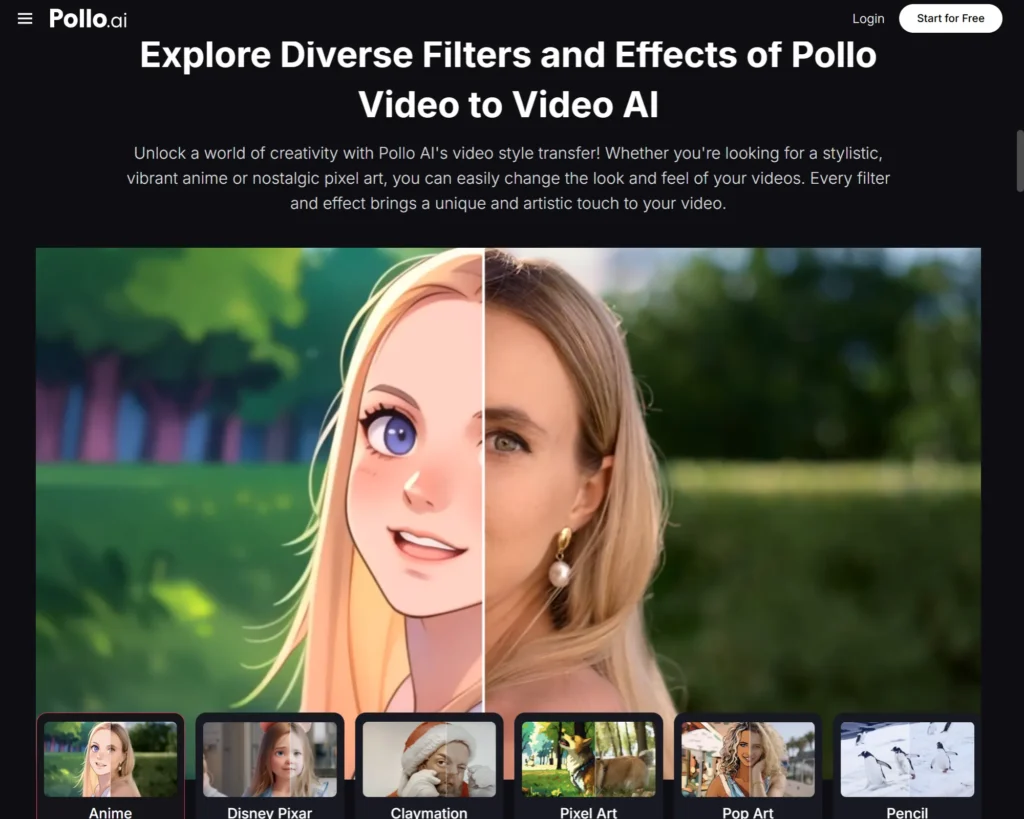
Pollo AI’s dedicated video to video AI tool inside its Creative Studio applies this capability within a multi-model environment that matters for real-world production use. Different generation models have different strengths across visual styles and transformation types — some handle style transfer more effectively, others excel at motion consistency, and others produce stronger results for specific content categories. Having access to multiple models within one platform on shared credits means matching the transformation approach to the specific footage and objective rather than accepting a single model’s limitations as fixed.
Website owners, marketing agencies, and startup founders who need reliable, quick information can use this capability across several immediately practical scenarios: transforming product demo footage shot in a flat, uninspiring environment into visually compelling content; applying a consistent cinematic aesthetic to footage captured across multiple locations with varying lighting conditions; updating the visual style of older brand content to match current design standards without reshooting.
The Production Economics Case for Video Transformation
The business case for video-to-video transformation over reshooting comes down to three factors that matter for any marketing operation working within a realistic budget.
- Time: A video transformation workflow can convert existing footage into polished content within hours of a single working session. A new video shoot requires scheduling, location coordination, equipment, talent, and post-production across multiple days at minimum.
- Cost: The per-minute cost of AI video transformation is a fraction of the per-minute cost of professional video production. For marketing teams that need to refresh multiple pieces of content simultaneously — an entire campaign’s worth of video assets updated to a new visual standard — the cost differential compounds dramatically.
- Possibility: Some content simply cannot be reshot. A customer testimonial captured at an event three years ago. Product demonstration footage from a version of the software that no longer exists. Brand content featuring people or locations that are no longer accessible. Video-to-video transformation is the only path to elevating the production quality of these assets without losing the content itself.
Marketing Studio: Connecting Transformed Footage to Campaign Output
Digital marketing and online business content requires visual assets that meet platform-specific format requirements and performance marketing standards, not just general visual quality.
Pollo AI’s Marketing Studio extends the video-to-video transformation capability into the campaign content layer — producing advertising and promotional video formats from transformed footage within the same platform, calibrated for the pacing and format requirements of paid social campaigns on Meta, TikTok, and YouTube.
For marketing teams that use video-to-video transformation to upgrade existing footage and then need to adapt that footage into multiple platform-specific ad formats, having both capabilities within one platform on shared credits eliminates the handoff friction that typically occurs between production and campaign deployment.
Mediaio AI and the Broader Video Processing Landscape
Writers and contributors to thewebverge.in are expected to cover detailed topics about digital marketing and trending technology tools — and understanding the broader landscape of AI video tools is part of building informed content for this audience.
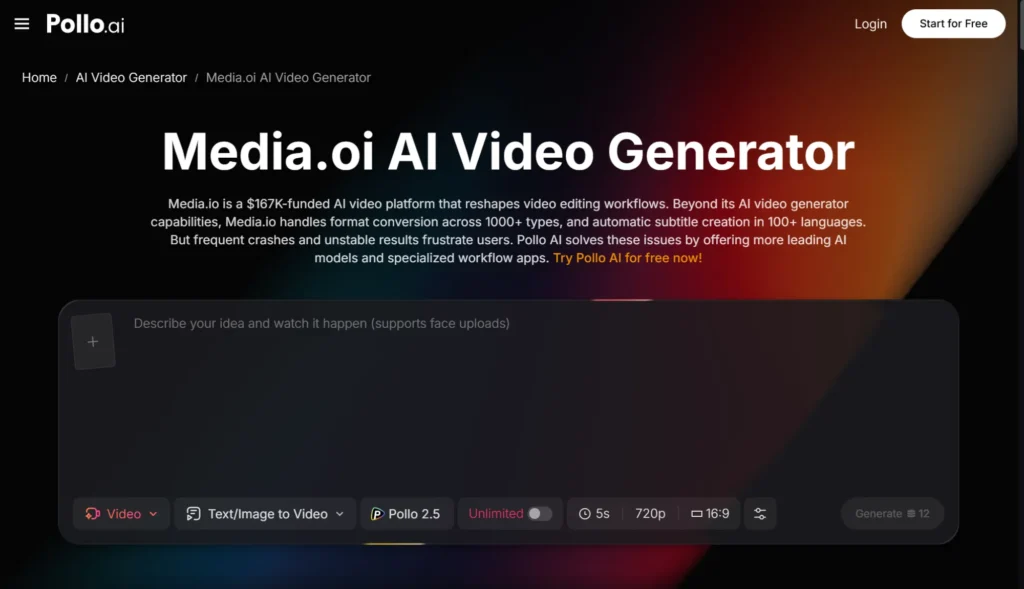
Mediaio AI has developed capabilities in AI video processing and enhancement — particularly strong for audio processing, subtitle generation, and video conversion tasks that support content distribution workflows. For marketing teams and creators who need both video-to-video transformation for visual quality upgrades and audio-focused video processing for distribution optimization, understanding where different tools are optimized helps build a more intentional production stack.
The distinction for transformation-focused use cases is between tools optimized for audio processing and format conversion versus those designed for visual style transformation and aesthetic regeneration of existing footage. Both serve genuine marketing content production needs at different points in the workflow.
Building Video Transformation Into a Systematic Content Strategy
Appearing on high-authority sites increases brand identity — and the same principle applies to the visual standard of the video content that represents a brand across digital channels. The marketing teams getting the most consistent value from AI video transformation have made it a systematic part of their content strategy rather than an occasional production fix.
That means establishing a regular review of existing video content libraries — identifying assets that are structurally strong but visually underperforming — and building transformation into the workflow for refreshing those assets on a planned cadence rather than only when an asset’s age becomes obviously problematic. The result is a content library that maintains its production quality standard over time without the accumulating cost of periodic full reshoots.
For digital marketers, SEO professionals, and startup founders building their content operations in 2026, video-to-video AI transformation represents exactly the kind of efficiency gain that makes professional-quality video content production sustainable without enterprise-level production budgets.